I am so excited! My fundraising initiative for the Nyamata Church is going very well. My parents' chuch hasn't even had their collection yet. This is such an important cause to me. Read more about it here.
Sunday, July 13, 2014
Wednesday, July 9, 2014
Typical Day in the Life of an MGS Student
Here is a theoretical schedule for average MGS student. There is a lot of structure to the days here
and most days follow this schedule. A
notable exception is Wednesdays when classes are over at lunch time and after
lunch, students have time for formal debate teams, extra class time for
teachers or exams. Just as a comparison
to the average American high school student, I have put a similar schedule for
my brothers who are in eleventh grade this year. Their schedule is not quite as formal and
structured as MGS, but it gives a good comparison. I think one of the biggest differences is the
amount of independence the girls show. They do not have a parents to keep them
in line and disciplined, so they rely on each other. They wake themselves up, they clean their own
dishes, they do their own laundry, etc
|
My brothers’ life
|
|
MGS student’s life
|
|
|
5:30
|
Wake up in dorm
shared with 179 other people. The dorm is hall style with all the bunk beds
in one room. Put on uniform.
|
|
Mom wakes each one up
in his own room, complain that they have to share a single bathroom with each
other, have cereal and milk for breakfast, running late so leave dishes for
mom
|
6:00
|
Start prep time,
meaning it is time to study independently!
|
|
Labor over clothing
decision, catch the bus to go to school
|
7:00
|
Time for breakfast
consisting of porridge and a hot dog bun sized piece of bread
|
|
Class starts, the
students switch between rooms allowing them to decide which classes they
would like to take. One of my brothers
takes band, the other an extra gym class, both take Spanish and technical
classes. They choose a math and science appropriate to their level
|
8:00
|
Class starts, the
students stay in the same room for all their classes and the teacher switches
between rooms. All students take entrepreneurship, physics, chemistry,
biology, mathematics, geography, political education, English, Kinyarwanda,
and French
|
|
|
10:30
|
20 minute break time,
then back to class
|
|
Lunch time-
consisting of the their choice from the school lunch options or packed from
home
|
12:30
|
Lunch time- Today it
is beans, carrots, rice, potatoes and maize meal.
|
|
Time to go back to
class
|
1:00
|
Still sitting with
friends or starting to wash own dishes and clean up dining hall
|
|
|
2:00
|
Time to go back to
class
|
|
School is over, go to
club, sports or band after school
|
2:45
|
|
|
Extracurricular time
is over, time to go home on the activity bus
|
4:30
|
Class is over, time
to change into sports clothes for free time. Popular activities are informal
basketball or pattycake games
|
|
Home, greet parents,
grab snack and work on homework until dinner
|
5:00
|
|
|
Dinner time, time to
wash dishes, back to homework after dinner
|
6:00
|
Free time is over,
time to shower in the communal bathrooms and change into prep clothes
(uniform). Study time until dinner
|
|
Done with homework,
time to hang out
|
8:00
|
Dinner time,
consisting of cabbage, carrots, rice, starchy baking bananas and cassava root
|
|
Mom encourages them
to go get ready for bed
|
9:00
|
Dorm is unlocked.
Students go and get ready for bed
|
Saturday, June 28, 2014
Developing World Problem #3: Internet
Before I arrived in Rwanda, many people had told me how
terrible internet was at the school and in the country as a whole. When I came, it was very slow by American
standards, but it was still functional for me and had exceeded my expectations.
The company used a satellite dish to direct internet to a router in the
computer lab and it serviced all the classrooms and the library. But at the end of March it started cutting
out every few minutes and then one day it stopped working altogether. The
longer I’m here, the more I realize how people take for granted the most
important uses of the internet such as updating or installing software. Nothing can download if wifi turns off
regularly.
![]() |
| MTN is both my phone and internet company. I have two sim cards, one for the phone and one for the internet |
A common way to access internet in Rwanda is to use the
phone networks on computers or mobile phones.
I have a personal modem that I can put into my computer to route the
internet and can buy a day for only $1. After
the satellite broke and the company could not repair it, the school started
using a router that they simply stick a phone sim card into to convert it into
wifi. However, the big kicker is that
you don’t actually get unlimited internet when you buy a day or month or
whatever. A day of internet is only one
gigabyte of data which may seem like a lot until you start actually using
the internet. The worst was when I
skyped with friends and it only lasted 2 hours.
My roommate once tried to install Microsoft Office and it took a few hours
to get about 80% through before shutting off. I have been trying to install Adobe on the
computer lab desktops so they can use Rachel but it shuts off after only a few
are done.
For personal use, I usually use the modem in the staff room but it is worse
there. Imagine 8 computers trying to use
1 gig of internet? Usually it is done by
lunch, especially because the teacher enjoy streaming youtube videos. Interestingly, the companies provide free Wikipedia,
facebook and twitter. So sometimes I have run out for the day, but I am still
able to go on those websites!
| From Maranyundo Initiative website |
So how does this affect the students? The internet does not reach the computer lab
so they do not go online. When I give
them a project that requires research, usually I have to do it for them, which
is both time consuming for me and a missed opportunity for them. I have noticed
they tend to be less inquisitive about large themes in the world because they
only have access to the information known by people in their immediate
vicinity. This is probably the main
reason I’m so excited about Rachel.
The students will be able to work and learn using a computer without requiring
the internet! On the other hand, right now they are more able to solve problems
on their own. In the US, if I have a
question or problem, I google how to take solve it, but they are able to work
more independently.
Thursday, June 19, 2014
Buying in Bulk?
![]() |
| Candy hoarder? |
I have been really lax about updating my blog lately. I'm sorry. I will try to do better. The senior three students had a speech competition so I went
to town to buy some prizes for the winners.
I finally settled on simple lollypops and biscuits. When I started picking out twelve candies,
the man in charge of the stand and everyone around him burst out laughing and
continued until I had paid and walked. Buying in bulk is not at all common
here. When I had bought the biscuits
earlier, the vendor asked if I was going to sell them in the street. There would be no other sensible reason to
stock up. Quite the opposite of Cost-co
loving USA!
Sunday, June 8, 2014
Raspberry Pi and RACHEL
Big changes are coming to
Maranyundo! This little device called
the Raspberry Pi has been making waves all over
the tech community for the last few years.
It is a credit card sized computer that only costs $35! It was specifically designed by a nonprofit
to be used in education for teaching students coding, but soon enough techies
in the developing world started swooping in and making it work for their uniqueproblems. One such project is called RACHEL standing for Remote Areas Community Hotspots for Education and Learning. This is an offline digital
library sent through a network to any computer that tries to access the
pi (Here is an online version of the library). It includes resources licensed under creative commons including textbooks developed by the state of California, Khan Academy videos and interactive exercises, much of Wikipedia, .books from Project Gutenburg and much more!
Maranyundo describes itself as a
School of Excellence and part of this high standard is to use technology in
teaching for the benefit of students.
This is not always so easy because of the unreliable internet and
electricity. But RACHEL-Pi requires no
electricity, as it is battery powered (you can still use it on a battery
powered laptop, which every teacher has) and supplies its own wireless network
that computers connect to as if it were wifi. The Maranyundo Initiative Board
visited the school last week and they brought the Rachel-Pi and donated by an
organization in Boston through one
of the founders of the school.
![]() |
| Marcella showing how to use the technology |
![]() |
| Working together with individual questions |
![]() |
| Exploring RACHEL independently! |
There was staff training a few days
later. I expected only teachers to come,
but the headmistress was so supportive of the technology that she implored even
the librarian and secretary to attend. It couldn’t have gone better. The teachers all brought their computers to
follow along with the demonstration. I
also have to point out that even with almost 20 computers connected to the
network, the Pi was still faster than the usual internet! It was really amazing.
Now my next step is to find
additional, Rwanda specific content to add to RACHEL. It would be great if
there were more English exercises, Kinyarwanda content, National Exam standards
and perhaps even some lessons about coding because that is the original vision
of the Raspberry Pi. I’m sure I will think of more as time goes by! The big challenge here will be to find
information that is not under any copyright or other protection. If I have any coding friends who would like
to help with this in any way, I would be eternally grateful (not even
exaggerating). Please get in touch with me if you are at all interested in
giving me even 5 minutes of your time for this project.
When you aren’t using RACHEL, the
Pi can be used with just a monitor and a keyboard as its own computer on a
Linux Operating System. Then you can do anything! So I also want to learn some
coding and possibly teach it to the girls or maybe even start a robotics club!
If any of my friends want to help me in this initiative in any way, that would
be great because I have no idea what I’m doing :p But I’m so excited to find
out where this can take the school! Now I just need to take a deep breath and
go one step at a time!
Friday, May 30, 2014
Food Post #5: Local Meat
I will make a post very soon about local food in general,
but this one is dedicated to meat! We have meat fairly rarely, about once a
week and only a golf ball sized amount each time. However, that makes it more
special and notable when you look at how meat is produced. Maranyundo,
for example, has its own cows, where we get our milk from. A few years ago, a businessman donated some
rabbits to help teach entrepreneurship and they have been breeding
like…rabbits, so we have rabbit every once in a while too. The only thing is, they just had babies and
they are just about the cutest things, but I need to keep remembering they are
my dinner and not to be admired or cooed over.
![]() |
| These guys were on their way to Kigali to be sold at market. Usually I only see chickens or goats strapped to the back of bikes or being walked along on a leash like a dog. I was so surprised by this that I had to take a picture. I was assured that the chickens were alive but most seemed pretty immobile to me so I still have my doubts. |
I
can’t forget about the goats, which are used for meat a lot and I often see
tied up to the back of bikes, bleating passively away, on their way to the
table. I also have to add that goat meat in Ghana stunk like a skink (I refuse to believe it was all in my head) but goat meat here just smells like meat!!
Goats are not used for milk or any other product here since it is such a bovine culture. Marcella, my American roommate, once mentioned that she had drank goat’s milk as a baby and that was followed by weeks of laughter (literally. It was brought up again at least twice a week). Eventually, it was explained to us that goats were used for their milk if you were too poor to afford cow milk or if you are malnourished. They could not imagine an American falling under either of those categories.
Chickens! For full disclosure, my family has chickens
and I think they are pretty disgusting, aggressive and mean creatures, but that
doesn’t change how I feel about their right to welfare or my right to eggs! Chickens are mostly only used for
eggs here (again, much more sustainable than using them for meat). But once they can no longer lay they are
eaten. But it is pretty tough and not that enjoyable. I much prefer goat. These are the chickens at the Benebikira
Sisters’ Compound. Typically, they are only a few chickens for a household and they just wander around outside pecking their day away.
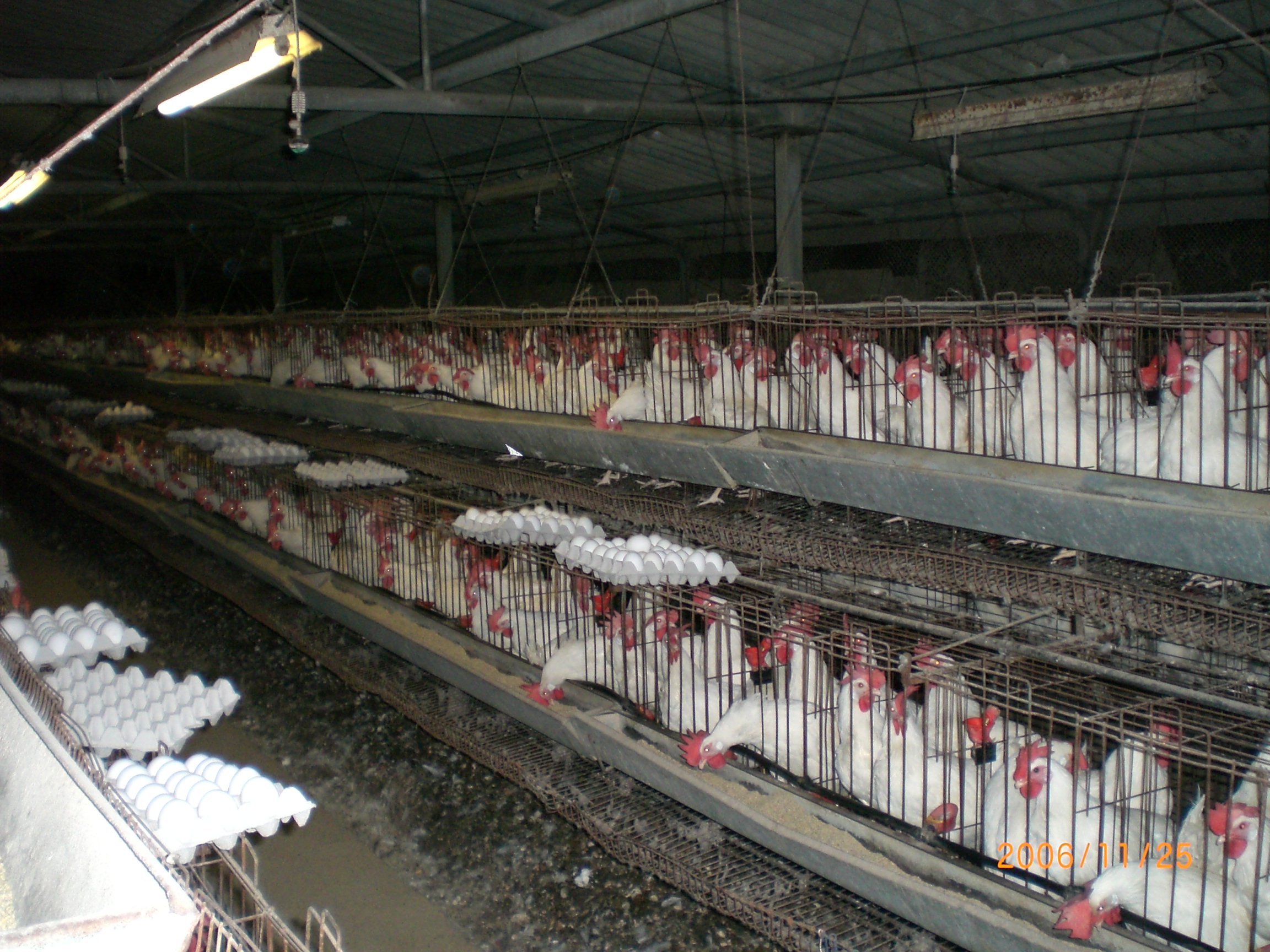
Let’s compare to how layers
live in the American agriculture industry.
| American layers: overpacked, no sunshine, terrible diet |
Rwanda
is obsessed with cows! They raise them
for milk and meat and their sense of wealth revolves around the cow. More information here. My background picture for my blog is actually
a cow pasture just to reflect how well they live. These cows are also at the Benebikira Sisters Compound.
They are always grass fed but by law, people are not supposed to remove their cows from their compound to help control disease, so people stock up on grass and keep them inside or close to home.
Sunday, May 25, 2014
Granola in Rwanda!
I spend a good portion of my time reminiscing about the
amount of food in the US. The spices! The raw vegetables! The protein! The variety! So I've been trying to come up with recipes
to remind me of home that I can easily do in Rwanda.
However,
I realized that with honey, oatmeal, peanuts and a splash of oil I can make minimalist
style granola! My home is abnormal
because it has an oven (although with no temperature settings, the dial is
simply labeled 1-10), but I made use of it today and it was much more
successful than my ill-fated mac and cheese!
Peanuts are sold in packages like this for about 75 cents.
But for the oatmeal, it is quaker brand! Also super expensive, a canister half
the size of the big ones in the US goes for about $4.
I have no idea why honey is so dark here? This big package was about $2.50. More
expensive than sugar. There is no brown sugar here.
Subscribe to:
Posts (Atom)

.jpg)


.jpg)
.jpg)
.jpg)